Practical content on translation and documentation.
Professional translation of official documents into Chinese with notarization. We translate passports, diplomas, certificates, powers of attorney, contracts and other documents into Chinese
Professional document translation into Korean for submission in South Korea, with notarization of the translation when required
Professional translation of documents into German for the German Embassy in Tashkent. Learn about notarized translations, required documents and the translation process
professional document translation into Arabic with notarization. We translate passports, diplomas, certificates, official documents, contracts and other documents into Arabic
Learn how a translation company can help prepare, translate and certify diplomas and other educational documents for nostrification in Uzbekistan
How to organise a website translation project: content inventory, terminology, interface copy, SEO, and quality checks before publishing.
A guide to preparing official translation for an embassy or university application: format, certification, transliteration, and timing.
A practical guide to website translation and SEO localization: pages, metadata, interface copy, and quality checks across three languages.
A practical guide to preparing certified translations of passports, diplomas, and certificates: receiving-party requirements, checks, and ordering steps.
Learn when certified or official translation is needed, how to plan professional website translation, and what to prepare before placing an order in Tashkent.
A practical guide to translating documents for a UK visa application, including which documents may require translation and what to check before submission
Professional document translation for embassies, visas, education and employment. Certified, official and notarized translation services
What is professional medical translation and why is accuracy essential when translating medical documents? A brief overview of professional medical translation services
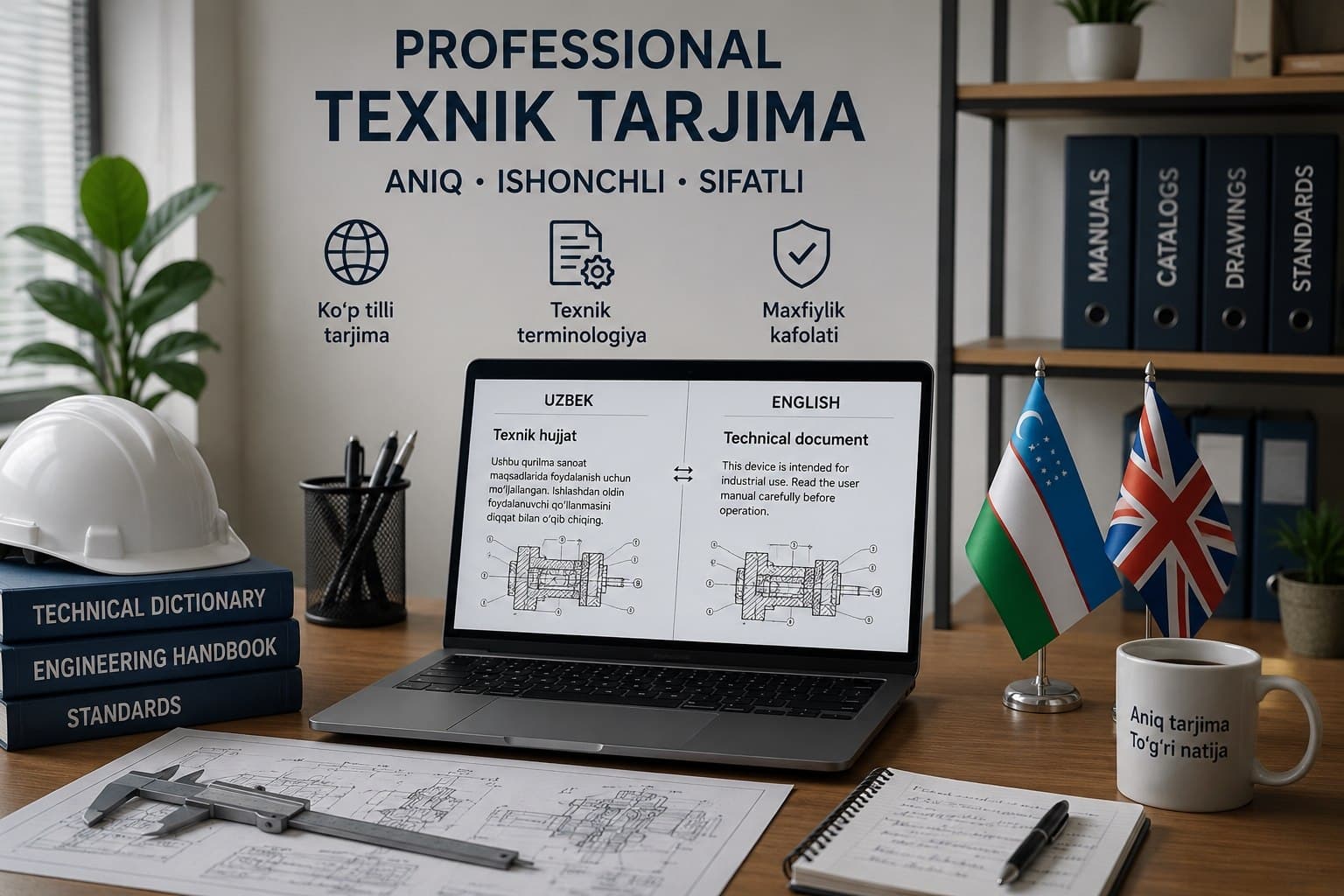
What is professional technical translation, why is it important, and what are the key requirements for translating technical documentation? Learn more about high-quality technical translation services
Translating a driver's license: transliteration, notarization, and formatting for international use.
How a power of attorney is translated: notarization, name transliteration, and requirements for use abroad.
Translating a company charter, founding agreement, and registration papers: correct formatting for banks and foreign partners.
How legal document translation is handled for contracts, agreements, and court papers: precise terminology and notarization.
How technical documentation, manuals, drawings, and specifications are translated: terminology, formatting, and quality control.
What to check when choosing a translation bureau: prices, online ordering, notarized translation, and convenience by district.
What drives per-1,000-word translation rates: language pair, subject matter, urgency, and workflow.
How to organize corporate translation in Tashkent for contracts, company charters, legal documents, tenders and ongoing business operations.
A practical guide to notarized document translation in Tashkent for passports, diplomas, certificates, visas, embassies and official use.
A guide to technical document translation in Tashkent for manuals, specifications, drawings, engineering files and project documentation.
Prepare medical records for translation with complete files, correct terminology, dates, units, medicine names, privacy controls, and recipient requirements.
How to brief and review a legal translation in Tashkent: purpose, jurisdiction, terminology, formatting, confidentiality, certification, and version control.
Before translating a driver’s license, confirm the destination rules, required sides, certification, name spelling, vehicle categories, and whether an IDP is needed.
A practical checklist for translating visa and embassy documents: use the official list, keep names consistent, choose certification, and plan for apostille.
Prepare a birth certificate translation for immigration, marriage, study, or family applications: names, stamps, apostille, certification, and scans.
A step-by-step guide to translating a foreign diploma and transcript for recognition in Uzbekistan, based on the current official public-service requirements.
A researched guide to apostilling documents in Uzbekistan: what an apostille confirms, official timing, common exclusions, translation order, and preparation.
How to order a passport translation in Tashkent without spelling mistakes: required pages, transliteration, certification, scans, and final checks.
A practical guide to notarized document translation in Tashkent: when it may be requested, what to send for a quote, and how to avoid name and format errors.
The translation industry in 2026 is evolving rapidly благодаря AI technologies, localization, and growing international business demands
Learn the key differences between a freelance translator and a translation agency. Compare pricing, quality, speed, and professional services
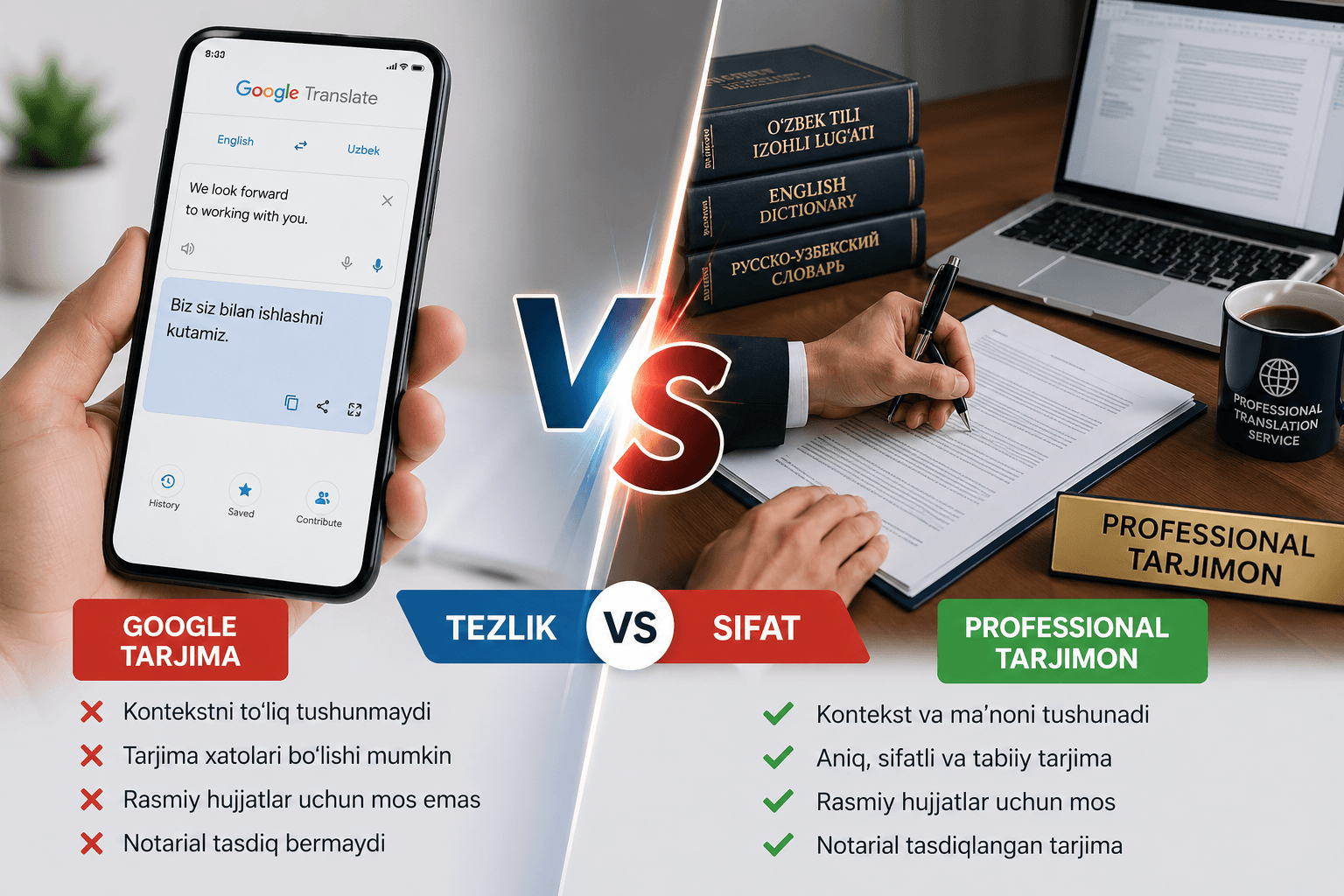
Google Translate is useful for simple text, but using it for official documents can cause serious translation mistakes. Learn why professional translation services are safer for legal and official paperwork
Professional translation helps companies build trust, communicate effectively with international clients, and expand into global markets. Discover why quality translation matters for modern business
Translation is more than words. Sometimes the most important meaning gets lost along the way
Google Translate is fast and convenient, but not always accurate. A professional translator takes into account context, style, and official requirements. In this article, we will analyze in which cases each option is better to choose.
What to check when choosing a translation bureau: prices, online ordering, notarized translation, certified translation.
Where translators can find paid work: freelance marketplaces, translation platforms, and direct client projects.
Whether a degree is required to start translating, which skills matter most, and how to enter the field through practice and a portfolio.
The usual order for apostille and translation, why it depends on the destination country, and how to avoid rework.
A plain explanation of what people usually mean by official translation, how it differs from notarized translation, and when it is required.
Why translators sometimes charge by the hour instead of by words, and which services are usually billed this way.
What drives per-page-word translation rates: language pair, subject matter, urgency, and workflow.
Why passport translation pricing can vary: language pair, page count, notarization, and rush handling.
What affects document translation prices: language pair, length, urgency, notarization, and document type.
When an original document is required for notarized translation, when a notarized copy may be accepted, and what to confirm first.
A practical guide to document legalization: apostille vs consular legalization, and the correct order for translation and notarized submissions.
A checklist for visa-related translations: common documents, rejection risks, and practical tips to match embassy/consulate formatting requirements.
Best practices for contract translation: terminology consistency, obligations, penalties, and bilingual formatting tips for business documents.
Why accuracy matters in medical translations: terminology, measurement units, and practical submission tips for clinics and hospitals.
Practical tips for translating a birth certificate: parent details, place names, transliteration consistency, and apostille/notary steps.
How to translate a marriage certificate for immigration and official submissions: name changes, registry details, and apostille/notary requirements.
A practical guide to diploma + transcript translation in Uzbekistan: terminology consistency, grades, stamps, and university requirements.
Avoid common passport translation mistakes: name spelling, transliteration, required pages, and submission-ready formatting for embassies and banks.
A clear overview of apostille for Uzbekistan-issued documents: when it’s needed, what documents qualify, and what to prepare.
A practical guide to notarized translation in Tashkent for passports, diplomas, and certificates: steps, common mistakes, and a quick checklist.